Notice: Function WP_Styles::add was called incorrectly. The style with the handle "wdt-search-frontend" was enqueued with dependencies that are not registered: wdt-fields. Please see Debugging in WordPress for more information. (This message was added in version 6.9.1.) in /home/omlafri1/domains/omlafricalogistics.com/public_html/wp-includes/functions.php on line 6260
Notice: Function WP_Styles::add was called incorrectly. The style with the handle "wdt-search-frontend" was enqueued with dependencies that are not registered: wdt-fields. Please see Debugging in WordPress for more information. (This message was added in version 6.9.1.) in /home/omlafri1/domains/omlafricalogistics.com/public_html/wp-includes/functions.php on line 6260 Skip to content
The rate card comes in. The trucks look right. The references check out. And then you sign.
What most procurement managers never think to ask for – and what most logistics providers hope you won’t – is the TRIR. Total Recordable Incident Rate. The number that tells you, per 200,000 manhours worked, how many people on that operator’s fleet got hurt on the job.
A high TRIR is not just an ethics issue. On an oil field, a mine site, or a large-scale infrastructure project, a logistics incident involving your contracted hauler can trigger your own HSE review, delay operations, and end up in your incident report to your principal. The liability does not stay with the hauler.
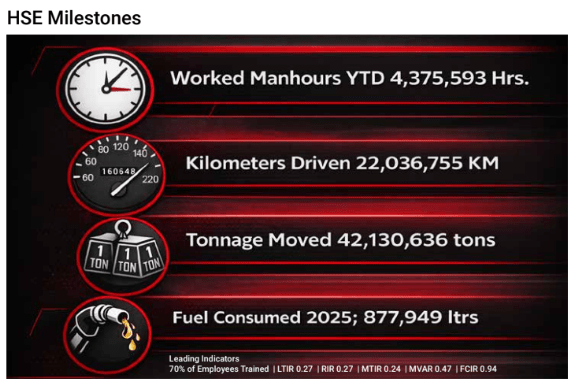
At OML, our TRIR sits at 0.39. Our MVIR – Motor Vehicle Incident Rate – is 0.20. These are not marketing figures. They are the result of over a decade of operational discipline on some of East Africa’s most demanding routes, across over a million manhours worked.
Before you sign the next contract, ask for the number.